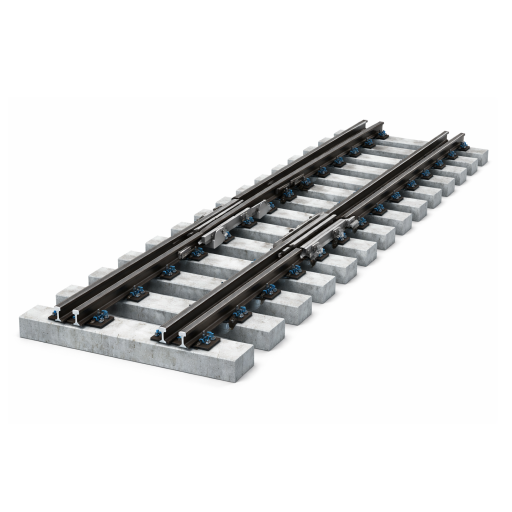
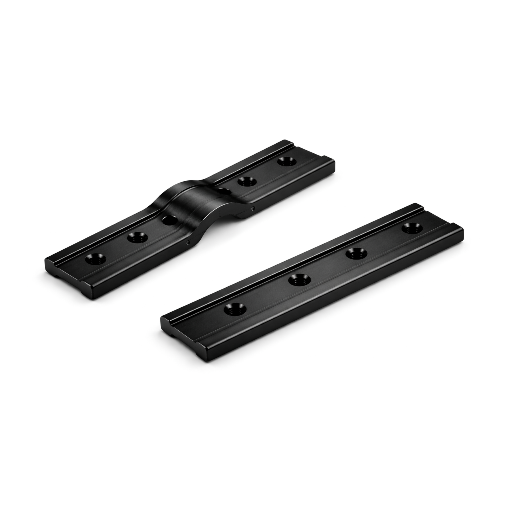
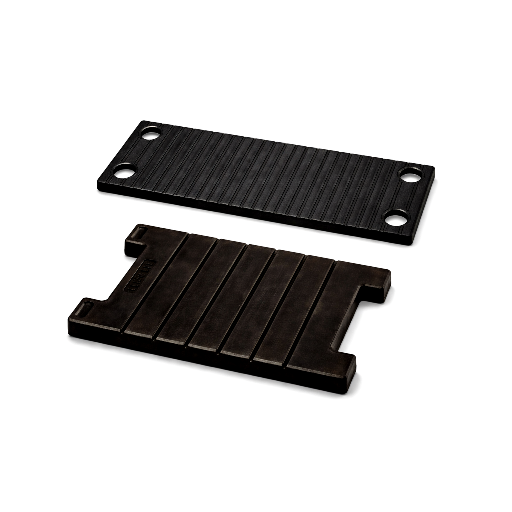
A railway Switch (often referred to as a set of points) is the active mechanical installation that facilitates the diversion of a train from one track to another. It consists of two primary components: the Stock Rails (the fixed outer rails) and the Tongue Rails (the tapered, movable inner rails). The engineering of a switch is one of the most complex aspects of track geometry. The tongue rail must be machined to a very fine edge so that it can sit perfectly flush against the stock rail, creating a seamless transition for the wheel flange. Switches are classified by their “turnout ratio” (e.g., 1 in 12 or 1 in 8.5), which dictates the maximum speed at which a train can negotiate the curve. Because the switch area is subject to intense lateral “thrust” as the train changes direction, it is reinforced with specialized slide chairs and heavy-duty fastenings. Modern switches often use heattreated or chrome-manganese steel to resist the abrasive wear caused by the constant grinding of wheel flanges. Furthermore, the “operating gear”—the motor or lever that moves the switches—must be perfectly synchronized with the signaling system to ensure the points are “locked” before a train is permitted to pass. Drawing Number :-T-4219,T-4966,T-4733,T-4866, T-6068, T-5836, T-5692